|
Through the years that I have been working with
organizations, I have always been fascinated by the power of events and celebrations to
pull people together. Since we spend our days working together and focusing on the
business at hand, the work becomes our primary medium for interaction. As such, its
character is formal, serious, important, necessary, technical, and administrative. And, as
we reduce payrolls, it also has become hectic, pressured, and demanding. We all accept
this as part of the work climate.
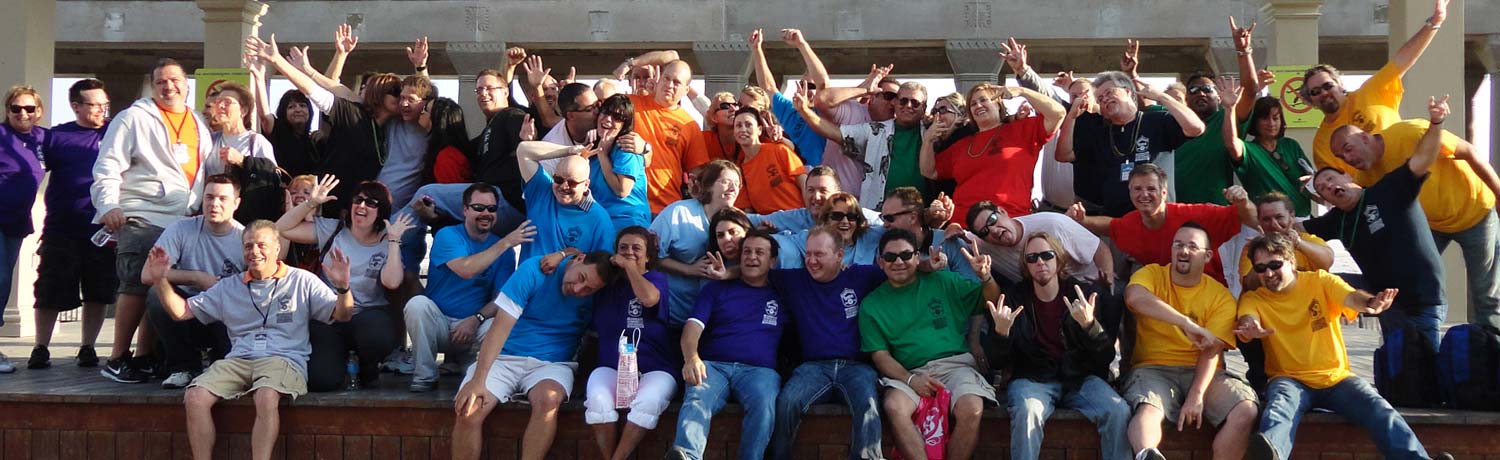
When there is an organization event or celebration,
however, the character changes somewhat. It gives people time to pull back, relax,
celebrate what has been accomplished, and look at each other as fellow humans bound
together by a common purpose.
From a team building perspective, it allows for greater interaction between people
separated by functional boundaries. This interaction then gives us the opportunity to see
our colleagues from a different perspective, breaking down what may have been hidden
barriers to open communication.
For example, during my work on construction projects years ago, I as an engineer was
regarded by the craft workforce rather skeptically. Engineers tended to make the work more
difficult by demanding strict adherence to the specifications. The communication was
usually formal, guarded, and almost always about business. Generally, we avoided them, and
they avoided us.
If only we could break down this invisible barrier, we might be able to collaborate on
how work could be performed better. I as the engineer brought technical expertise, but the
craftworker brought years of practical, hands-on experience and knowledge about the trade.
In 1980 when I began learning about employee involvement, I was totally unaware of the
value of events and celebrations. As we moved forth with worker involvement in solving job
problems, the atmosphere on the site became more open and trusting.
The Golf Tournament
One day one of the electricians suggested we consider sponsoring a golf tournament for
all site employees. Although this was a little off-the-wall for us, we assembled a small
group of people to organize it. The tournament was held, sausages were barbecued, and we
all had a good time.
The following Monday at work was different. Somehow the communication was better...more
open. Those who participated in the tournament talked about how nice it was to have
management and labor, not to mention labor and labor (there were about 20 unions
represented on the jobsite), doing something informal together.
After this event was held, we began to get other requests for similar events. If
someone had an idea for an event, we would usually let them take the lead in organizing
it. In another example, our ironworkers suggested a bass fishing tournament. Management
approved it, the ironworkers planned it, and it too was successful. Since I wasn't a bass
fisherman, but wanted to participate anyway, I was paired with the sheetmetal general
foreman for the day. We had a great day. From that day on, he and I at work had no
difficulty communicating on any level about any subject. The barrier had been broken down.
Over the remaining two years of the project we held other events such as retirement
luncheons, milestone accomplishments, crew award dinners, and of course, other tournaments
that continued to break down barriers and build the team. The work atmosphere was
excellent, and so was job performance. The big lesson for me over those two years was that
these events were important in building relationships and, ultimately, the larger team.
The Need for Belonging
Humans have needs, and one of those needs is for belonging. We want
to feel a part of something... to be included. Our association with others is a necessary
part of our completeness. But if you look at our lives today, there is much separation,
both in our neighborhoods and at work. Yet the need for affiliation is always present.
Perhaps this is why corporate celebrations and events tend to be valued. It's the one
opportunity to pull back and look at ourselves as this larger team of people who truly
work together toward our common purpose.
Terrence E. Deal and M. K. Key, in their new book Corporate
Celebration: Play, Purpose, and Profit at Work, state a similar view. They say
that "Celebration is vital to the human psyche. All of us have an emotional craving,
a deep-seated need to participate in ritual and ceremony. When we do, each of us
experiences extraordinary intra-psychic feelings."
They go on to state that "In authentic celebration, people are willing to step out
of their daily routine, drop their outer masks, and be fully present in the occasion:
being a part (we) and also being apart (me). In the experience of we is the
collective sense of family, inclusiveness, communion, belonging, connection, solidarity, a
common purpose, vision, and values. We cannot be complete as individuals unless we are
deeply involved in community."
My Next Project
My next assignment was a megaproject of 7000 skilled craftsworkers,
engineers, and administrators all represented by an array of companies and unions. This
project was in trouble. It was falling further behind schedule each month with no signs of
changing.
I was asked to manage a team building process that I would design. What I implemented
was a multifaceted approach to the project's improvement centered on worker participation.
(We didn't call it "employee involvement" in 1983.) Remembering my previous
experience, I incorporated events and celebrations as an integral part of the improvement
process.
With a project so large, many of the craftsworkers were travelers, coming from other

states. They had little ties to the local area and few acquaintances. To think of events
for the project, we simply listened to what people were saying. Therefore, most of the
events were suggested and planned by the people themselves, and since few limitations were
imposed, the list was extensive:
-
Golf tournaments
-
Fishing tournaments on the Delaware River
-
A tennis clinic
-
A 10-kilometer run
-
A softball tournament
-
An essay contest that included family members
-
A photo contest
-
Racquetball clinic
-
A volleyball tournament
-
Bowling outings
-
Trips to Atlantic City casinos
-
Water conservation contest
-
March of Dimes Walk-a-thon
-
A picnic at a local park
-
Whitewater rafting trip
-
An armwrestling contest
-
Weight-loss contest
In addition to the events, we held numerous celebrations to show
appreciation for accomplishing important milestones and to generally pay tribute to our
workforce. These celebrations included:
-
Honoring our Vietnam vets
-
A site open house that attracted 10,000 employees and family members
-
Site appreciation day with mementos for everyone

-
Over 200 recognition awards for individual and team accomplishments
-
Over 200 suggestion awards
-
Several significant milestone achievements
Workers with ideas for events were given time to plan and coordinate

them and money for shirts, trophies, and mementos. There was one guiding principle that
drove all of our thinking on how to design events and celebrations: "Whatever you do,
do it first class!" This sent a message, loud and clear, to the workforce that if we
expected top quality work from them, then they could expect it in return.
There were critics who said that these kinds of events had no place on a construction
worksite. The critics' voices quieted, however, when job productivity and quality began to
rise unquestionably. Within six months, and continuing through the next three years to the
completion of the project, productivity and quality rose significantly, recovering the
lost schedule and completing the project on time.
It Just Makes Sense
I really don't know why we struggle so in work organizations with
the notion that when people feel better about their workplace, when they feel a connection
to it, when they enjoy their relationships with coworkers, and, once in a while, have an
opportunity to step back and relish in their accomplishments, that this somehow isn't
"real business."
We pay inordinate attention to the technical side of business, but little attention to
the people side.
Southwest Airlines remains alone at the top of the list of companies whose stock has
returned the highest return to investors since 1972, and it was the only airline to remain
profitable during the difficult years of 1990 through 1994 when the industry as a whole
lost $12.8 billion. (From the book NUTS! Southwest
Airlines Crazy Recipe for Business and Personal Success)
I can't help feeling that this somehow relates to their culture of celebration. Yes,
they have made excellent technical and strategic decisions. But it's the sheer enthusiasm
of its people that drives the company's success. According to Kevin and Jackie Freiberg
who authored the book Nuts,
"Southwest Airlines is famous for honoring individuals, groups, significant events,
and important accomplishments in creative, festive, and often positively outrageous ways.
There are few organizations where people celebrate life as passionately and as
consistently as do the people of Southwest Airlines."
Perhaps one day soon we will recognize that these events and celebrations are not
intrusions to the work, but, in fact, necessary ingredients in its performance. We can
throw people together into any group, give them a mission, and have them produce a result.
But if we expect that result to be extraordinary, and if we expect it to last over time,
then we must pay homage to the spirit that resides within us. Those who do will win, those
who don't.... well, let's just say that they will fall somewhat short of their potential.
Resources from the Teambuilding
Inc. Bookstore: Team Building, Conflict
Resolution, Self Directed Teams,
Motivational, Employee Involvement, Empowerment, Facilitation
& Large Scale Involvement
Related Team Building Program
You Take the Cake!
|