| |
Motivating Factors by Scott Briggs |
What
does it take to make employees give you their best? Compensation and
benefits may take a back seat to a company culture that inspires and
involves workers.
In ancient times, it wasnt hard to motivate workers. A ships captain,
for example, could stick a crew below deck, chain each mans hands to an
oar, and start cracking the whipliterally. Chances are, the captain got
where he wanted to go. Such
techniques wont likely pass muster with
your in-house counsel today, and, even if they did, employee turnover
rates would go through the roof. So,
whats a modern manager to do?
Make em teammates
Well, one option is to stick with the rowingminus the whips and chains,
of course. Peter Grazier, president of Teambuilding, Inc., sends groups
of his clients employees out onto lakes and rivers, where Dan Lyons,
former Olympian and world champion, teaches the novices a thing or two
about his sportand effective teamwork.
Rowing is a good team-building activity, Grazier says. Put eight
people in a rowing shell. The boat doesnt go if they dont work
together.
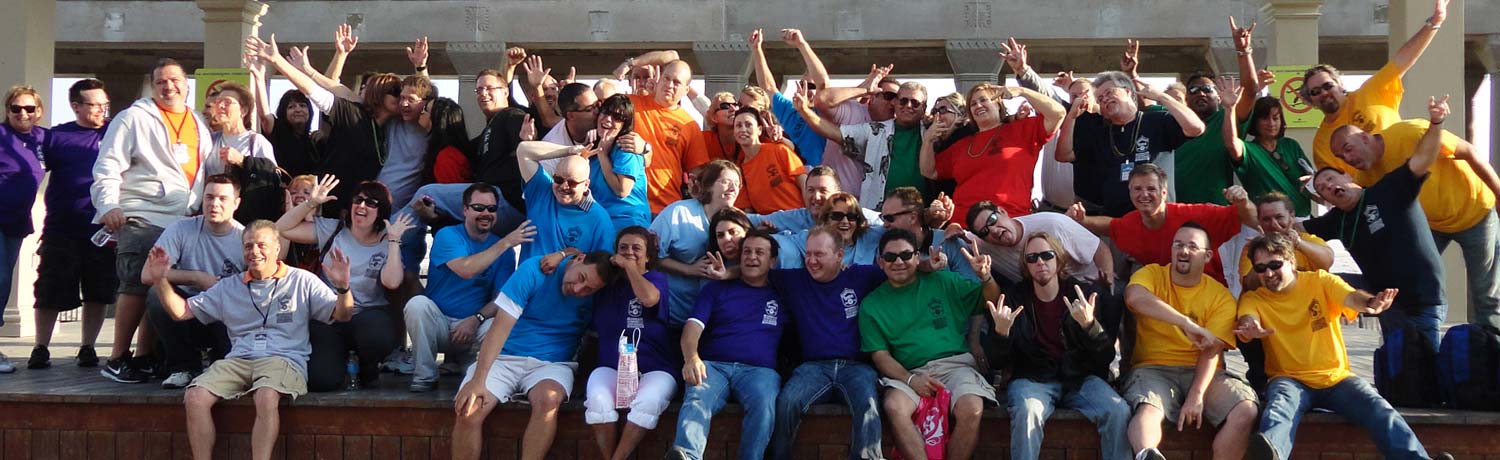
Graziers Chadds Ford, Pennsylvania-based firm arranges unusual,
off-site activities all over the country to foster collaboration among
colleagues and impart lessons that are applicable back at the office.
Teambuilding, Inc.s offerings range from elaborate treasure hunts, to
gourmet cooking sessions, to rugged outdoor adventures, to role-playing
games inspired by Gilligans Island and Mission: Impossible. Such
unorthodox circumstances, Grazier explains, are more conducive to
cultivating a productive group dynamic than are most workplace settings,
where presumptions about
employees roles and abilities tend to be firmly entrenched.
When you put a secretary on a team with a couple of engineers to find a
treasure, Grazier says, and the secretary solves clues that the
engineers cant figure out, all of a sudden they see that secretary in a
different light.
Teambuilding, Inc. operates on the premise that camaraderie boosts
productivitya notion supported by research dating back decades.
Psychologist and Harvard Business School professor George Elton Mayo
conducted a study in the 1920s to gauge how working conditions affected
employee output. Mayo brought together six women who built telephone
relay devices on an assembly line at Western Electric Hawthorne Works in
Chicago. Mayo experimented with shortening the womens work days, giving
them rest breaks, and providing free meals. After each adjustment, the
teams output increased. However, when Mayo removed all his changes,
output rose even further. By this time, the women at Hawthorne Works had
bonded around a common cause. Their cohesivenessnurtured by supportive
supervisionled them to work harder and improve their performance. The
result became known as the Hawthorne effect.
Achieving a Hawthorne effect today may require cracking down on team
members whose work is less than stellar. High-performing employees tend
to get frustrated when their momentum is bogged down by low-performing
co-workers, says Roxanne Emmerich, a Minneapolis-based management
consultant and author of Thank God Its Monday: How to Build a
Motivating Workplace. In 1999, Fortune magazines Why CEOs Fail cited
lack of control over poor performers as the number-one reason business
leaders lose their jobs. Yet, Emmerich says, many managers do little to
curb workplace dysfunction.
They think they can manage everything with a process or some training
or an Excel spreadsheet, Emmerich says, instead of getting their
fingers dirty and dealing with difficult behaviors.
Give em a vision
High performers are also moved by inspiring missions, Emmerich says. She
urges businesses to craft concise, evocative vision statements that lay
out precise, important goals.
Im not talking about a 20 percent return on equity, Emmerich says.
Thats not motivating. And you cant say things like empower our
people or world-class. That watered-down language means, We cant
measure it, and, therefore, we dont mean it. When Bill Gates says, a
computer on every desktop, or John F. Kennedy says, a man on the moon
by the end of the decade, those are clear pictures of end results.
Gatess statement doesnt say anything about customer service,
productivity, profitability, quality, or creativity, Emmerich notes.
But when he presents a clear picture of the end result, all those
things are implied.
An effective vision statement, Emmerich says, inspires employees to
pursue more than profits. Alan Robinson, a professor at the University
of Massachusetts-Amherst, Isenberg School of Management, agrees. Really
savvy managers give people the opportunity to feel that theyre part of
something bigger than themselves, Robinson says. President Kennedy had
the best scientists in the world working for him for half to a third of
what they could have made in private industry. But they were going to
the moon in 10 years. So they worked overtime, round the clock.
Get em involved
On its own, a lofty mission might not be enough to motivate employees.
Most people also want to know that their contributions toward that
mission count for something. Grazier founded Teambuilding, Inc. after he
worked as a civil engineer and saw what happened when he started
soliciting more input from employees on his business decisions.
Absenteeism and turnover ratesboth typically about 10 percent in the
construction industryshrank to 1 or 2 percent.
People felt like coming to work, Grazier says. Why? Because they were
valued. They were listened to. They were involved.
Graziers experience reflects famous mid-20th-century findings by
Abraham Maslow, Frederick Herzberg, and Douglas McGregor, all of which
are required reading in many business schools today. (See sidebar on
page 9 for more about this research.) These pioneers in the study of
employee motivation concluded that people yearn to fulfill their
potential, participate in decision-making, and make a difference.
Grazier keeps these needs in mind when hes hired as a consultant to
help clients boost productivity. He recalls a tool-and-dye operation,
for example, where one mechanics poor attitude was dragging down the
entire company.
We put him on a team that was trying to figure out new ways of making
machine changeover times faster, Grazier says. Within six months, he
was totally pumped. He was energized. The human resources vice president
told me, This guy has been a problem for our organization for 20 years.
All of a sudden, hes done a major turnaround. Well, for 20 years, the
organization wasnt listening to him, wasnt involving him, wasnt
making him part of the team. He was just a worker coming there every
day, doing what he was told to do. He was highly creative, highly
intelligent, and he had ideas for making things better, yet nobody ever
asked him.
As it turns out, tapping employees creative juices may be more
important now than ever before. With the rise of China and India and

developing nations, not just as manufacturers, but as purveyors of
intellectual property, the distinguishing factor between businesses is
going to be the ability of an organization to innovate and create,
Grazier says. So, if a worker has an idea in the shower this morning to
make some part of his job better, easier, or faster, whats motivating
him to tell somebody about it when he gets to work?
Dont show em the money
Some companies assume a little extra cash will do the trick. Many firms
install incentive programs that promise employees a percentage of the
profits or savings their ideas generate. This may seem like a win-win
proposition, but such programs often backfire. For one thing, the reward
arrangement can lead to unexpectedand incredibly expensiveoutcomes.
During research for Ideas Are Free, a book Robinson co-wrote with

Valparaiso University professor Dean Schroeder, the authors learned that
French carmaker Renault once implemented an idea by one of its workers
that prevented damage to unfinished vehicles during assembly. The
employees suggestiona minor process changesaved Renault a fortune,
putting the firm in an awkward position. The company basically owed him
millions,
Robinson says.
Incentive programs present other problems, too. Sometimes, theyre
simply too tempting. Robinson cites many examples of people lying,
cheating, and stealing to defraud employers out of cash awards.
Incentive programs can also foster unproductive competition and
resentment among colleagues. In an organization, an idea involves lots
of people who evaluate it, market it, implement it, and budget it,
Robinson points out. If only the originator of the idea gets the
reward, it completely undermines teamwork. Also, if rewards are based
solely on an ideas direct financial implications, theres nothing
driving employees to improve such outcomes as customer loyalty and
customer satisfaction. You cant measure the effects of most ideas,
Robinson says. So, if your incentive system is linked to revenue, most
of the best ideas get ignored.
The most powerfuland perhaps most surprisingargument against financial
incentive programs is that money isnt even an effective motivator. Yes,
workers require payment, but their tendencies to perform at their
highest levels are more likely influenced by intrinsic motivationthe
desire to do something based on the enjoyment or personal fulfillment
that comes from completing a task. The problem with extrinsic

motivationdesire thats created by external factors, such as the

promise of moneyis that it makes a person feel controlled by an outside
force rather than inspired from within. Psychologist Edward Deci
examined the differences between intrinsic and extrinsic motivation in a
famous study published in 1971. He presented a series of puzzles to two
groups of college students. Members of one group were paid for their
efforts; the other students were not. When observers left the room,
study participants receiving payment stopped working on the puzzles,
while their unpaid counterparts carried on. This experimentand many
others that have shown similar resultsdemonstrates that people are more
likely to become engaged in an activity if their motivation is
intrinsic, rather than extrinsic.
Intrinsic
motivation is the single, most important factor associated
with innovation, creativity, and problem solving, Robinson says.
Thats where the action is. Unfortunately, thats where most managers
spend very little time.
So, how do you stir up intrinsic motivation within your workforce?
Remember the work of George Elton Mayo, Abraham Maslow, Frederick
Herzberg, and Douglas McGregoror, for that matter, of Peter Grazier,
Roxanne Emmerich, and Alan Robinson. Employees want effective teams,
inspiring visions, opportunities to provide input, and assurances that
their input is valuable to an organization. When you ensure such
elements are present in a professional setting, your employees are
likely to work, not just because they have to, but because they want to.
Lets say a secretary can type 15 letters in a day, but the
organization will accept 10, Grazier says. The difference between 10
and 15 is discretionary effort. What that secretary does between the
minimum the organization will accept and the maximum he/she can do is
totally up to the individual. So, what motivates a person to produce
above the minimum?
Answer that question correctly, Robinson says, and you reap financial
rewardsfor your company and your employees alike.
Its a virtuous cycle, he explains. If you get your people
intrinsically motivated, they generate more revenue for you, and you can
share more with them.
Motivation
Master Class: Three Big Ideas
Plenty of
people have offered insights about employee motivation, but the following
theories are among those most widely embraced by business educators. All
support the notion that people need more than money and a dental plan to
give you their best. Employees thrive when given opportunities to succeed,
take responsibility, and participate in decision-making and problem-solving
processes.
Abraham Maslow: Hierarchy of Needs
Maslows A Theory of Human Motivation, published in Psychological Review
in 1943, presents a hierarchy of five universal human needs: physiological,
safety, love (or belongingness), esteem, and self-actualization.
Maslow believes people attempt to satisfy these needs in a specific order. A
person will meet physiological needs (for food, sleep, etc.) before
addressing needs for safety, love, and so forth. Moreover, Maslow considers
the first four needs in his hierarchy deficiency needs, which stop
providing motivation once they are satisfied. However, the hierarchys final
needself-actualizationis a being or growth need that drives behavior
throughout a persons life. Therefore, if a business continually gives its
employees opportunities to meet this high-level need, the company can expect
a well-motivated workforce.
Frederick Herzberg: Motivation-Hygiene Theory
In his 1959 book The Motivation to Work, Herzberg arranged a set of
workplace factors into two categories: motivation
and hygiene.
People expect positive hygiene factors in their workplaces, Herzberg says.
When present, these factors can prevent employees from feeling dissatisfied
with their jobs, but they dont necessarily push people to achieve greater
productivity. Motivation factors arent necessarily expected, but when
theyre in place, Herzberg believes they produce feelings of satisfaction
and drive employees to succeed. Like Maslows needs hierarchy, Herzbergs
motivation-hygiene theory suggests that a business must satisfy one set of
needsin this case, hygiene factorsbefore more powerful employee-motivating
factors take effect.
| Hygiene Factors |
Motivation Factors |
| Compensation |
Recognition |
| Benefits |
Opportunity for advancement |
| Working Conditions |
Sense of accomplishment |
| Job Security |
Responsibility |
| Policies and supervision |
Interesting, challenging work |
| Status |
|
| Interpersonal relations |
|
Douglas McGregor: Theories X and Y
McGregors 1960 book The Human Side of Enterprise formulates two models of
workplace behavior:
Theory X and Theory Y.
Theory X assumes:
People inherently dislike work.
People must be coerced or controlled to perform work and be productive.
People would rather be directed than take responsibility.
Theory Y assumes:
People are drawn to work as naturally as they are drawn to play or rest.
People will direct themselves if they are committed to an
organizations goals.
People can learn to seek and take responsibility.
Many people can use imagination, creativity, and ingenuity to solve
business problems.
Businesses typically only tap a portion of their employees intellectual
potential.
A business operating under Theory X uses rewards and punishments, close
supervision, inflexible direction, and strict rules to manage employees. A
business operating under Theory Y encourages employee involvement when
making decisions and solving problems. This approach allows a business to
better capitalize on the ideas and abilities its workforce possesses.

Article
written by Scott A. Briggs, a
Minneapolis-based freelance writer, for Effect magazine, a publication of
Larson, Allen, Weishair, & Co., LLP, Fall, 2006.
Check out books on
motivation in the BOOKSTORE.
back to

|
|